

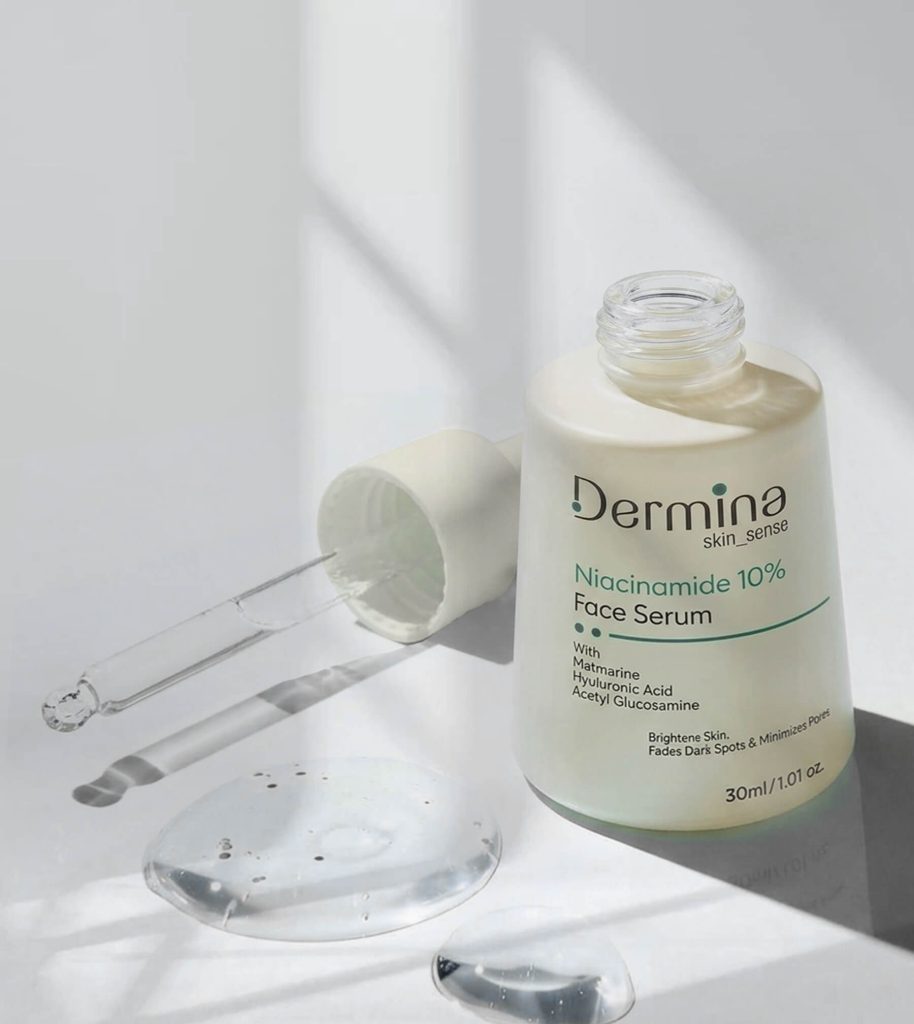
Quick version first. Niacinamide? It’s just vitamin B3, made for skin. And the niacinamide benefits for skin? Less oil. A tougher skin barrier. Calmer redness. Slowly, a more even tone. One clinical trial gave people a 2% niacinamide cream twice a day, and their faces made less oil within four weeks. Another study ran for 12 weeks and saw fewer red blotches and dark spots, and smoother skin too. How do you use it? A leave-on serum after you wash, once or twice daily.
Key Takeaways
- In one trial, people used 2% niacinamide for a month. Their skin got a lot less oily.
- Your skin makes more ceramides with it. Think of ceramides as the glue that holds moisture in and keeps irritants out.
- Give it twelve weeks. Red patches, dark spots, and rough texture all got better in testing.
- Oily? Combo? Acne-prone? Sensitive, even? It’s fine for you. It builds your barrier up. It doesn’t strip it.
- Our Niacinamide face serum has 10% niacinamide plus centella, allantoin, hyaluronic acid, and acetyl glucosamine. Oil, tone, and barrier, one bottle.
- By day, our Niacinamide 5% Fluid Sunscreen adds sun protection without the grease.
Shiny T-zone by lunch? Pores that look bigger every time you check the mirror? Old acne marks that just won’t fade? Searched for any of these? Niacinamide has probably come up.
Niacinamide isn’t some new fad, by the way. Skin doctors have been studying vitamin B3 for decades. One ingredient, several problems, no harshness. So, what does niacinamide do for skin? Six things, mainly. We’ll take them one by one, with how to use them at the end.
1. Niacinamide for Oily Skin: Less Shine, Less Grease
Ask anyone why they bought niacinamide, and “oil” is usually the answer. Good news: studies agree. Volunteers in one trial used a 2% niacinamide cream, morning and evening. Four weeks later, their skin made clearly less oil than a second group on a plain cream.
Trying niacinamide for oily skin? Don’t rush it. One month, every day. Then check how your face looks at 2 pm.
- Good for: a shiny forehead and nose, combination skin, faces that turn greasy by lunch
- Time to see results: around 4 to 6 weeks
- Tip: use it morning and night for the best oil control
2. Niacinamide for Acne-Prone Skin: Calmer Breakouts
Ever wondered where a pimple comes from? Too much oil, a jammed pore, and then that sore red bump. Niacinamide steps in twice. It turns down oil production. And the redness around the spot? That calms down too.
Mention niacinamide for acne-prone skin to most dermatologists, and they’ll say it’s worth a try. Lots of people use it alongside salicylic acid. One unclogs pores. The other stops new oil from building up. Teamwork.
- Helps with those sore, red pimples and pores full of grease
- Use it with: salicylic acid, azelaic acid, and a moisturizer without oil
- Big, painful cysts? See a doctor. A serum alone won’t fix them.
3. Niacinamide for Dark Spots: Fades Post-Acne Marks
The dark spot studies are honestly the most impressive part. Twelve weeks in, the people using it had fewer dark spots than when they began.
In India, most dark spots are what doctors call post-inflammatory hyperpigmentation, or PIH. The brown mark a pimple leaves behind. On medium and deeper skin tones, these marks show up more and hang around longer. That’s exactly why slow, gentle niacinamide for dark spots makes so much sense for us.
Melasma, though, is a whole other thing. Hormones and sun cause it, not pimples. New patches that keep spreading? A dermatologist should see them.
4. Niacinamide for Uneven Skin Tone and Redness
The same 12-week study saw less redness and smoother skin as well. So niacinamide for uneven skin tone helps with two kinds of marks: the brown ones and the pink, blotchy ones.
Results build slowly. Expect two, maybe three months. And sunscreen matters here. Skip it and you’re fading old marks while making new ones. Our Niacinamide 5% Fluid Sunscreen makes that easy: a light fluid that protects and gives you a little extra niacinamide on top.
5. Niacinamide for Skin Barrier: Stronger, Less Reactive Skin
If your skin flares up easily, this might be the most useful benefit. A lot of your barrier is built from fats called ceramides. Skin cells are the bricks, and ceramides are the cement. Moisture stays in. Pollution stays out.
Researchers found that with niacinamide on skin, ceramide levels went up. The barrier worked better too. That’s why dermatologists often reach for niacinamide for skin barrier support when skin is sensitive or prone to rosacea.
Retinol makes you peel? Acids make you sting? Niacinamide usually won’t. Niacinamide repairs. It doesn’t scrape.
- Barrier in trouble? Tightness. Stinging. Flakes. Redness after washing.
- Niacinamide’s job: more ceramides, more moisture held in
6. Smaller-Looking Pores and Smoother Texture
Let’s be honest, pores don’t shrink permanently. Niacinamide just makes them less obvious. Clear out the oil sitting inside, and they look smaller. The 12-week study also linked it with better texture.
This is really a side effect of benefit number one. Less grease, less build-up, neater-looking pores.
Benefits of Niacinamide Serum vs. Other Formats
These days, niacinamide in skincare products turns up everywhere. You’ll find it in face washes, night creams, serums, and sunscreens. But which format gets you the most out of it?
A serum, usually. Two reasons: strength and time on the skin. Serums often carry 5% to 10% niacinamide and stay put for hours. A face wash still helps, but it’s gone down the drain in under a minute.
Here’s where niacinamide shows up in Dermina products:
- Niacinamide 10% Serum: Our hero product. 10% niacinamide, backed by centella asiatica, allantoin, hyaluronic acid, and acetyl glucosamine.
- Niacinamide 5% Fluid Sunscreen: We put it on as the last thing in the morning. SPF and 5% niacinamide in one bottle. Light, not sticky.
- Acnecidol 0.1% Foaming Facewash: Niacinamide teams up with salicylic acid and tea tree oil here. Pick it if your oily skin also breaks out.
- Tint Glow Foaming Facewash: A face wash with niacinamide, vitamin C, and hyaluronic acid. Leaves skin clean and more even.
- Vitamin C 15% Serum and Retinol 0.1% Face Serum: Niacinamide plays a supporting role in both.
Want the full set of niacinamide serum benefits? Make Dermina’s Niacinamide face serum your main step. The rest just add a little support through the day.
How to Use Niacinamide Serum
Let’s go step by step. This is how to use niacinamide serum the right way:
- Cleanse. A gentle face wash, then pat your skin dry.
- Two or three drops. Whole face, plus neck. Not just the pimples.
- Pause. Wait about sixty seconds.
- Moisturise. A light, oil-free cream seals it.
- SPF if it’s daytime. Always the last step.
A few tips:
- New to actives? Once a day for the first week or two. Then twice, if all’s well.
- Patch test first. Jawline, two days.
- A bit warm or tingly at the start? Pretty common. Not gone in a week? Use it less often.
- One new product at a time.
A Simple Niacinamide Skincare Routine
Morning
- Gentle face wash
- Niacinamide serum
- Light moisturizer
- Niacinamide 5% Fluid Sunscreen, SPF 30+
Night
- Remove makeup and cleanse
- Niacinamide serum, or a retinol serum on alternate nights
- Moisturiser
Can you mix it with other actives? Usually. It gets along with vitamin C, retinol, hyaluronic acid and salicylic acid. Lots of us do vitamin C in the morning, retinol at night, niacinamide both times. Simple, and that’s why this niacinamide skincare routine actually sticks.
The Takeaway
Are the niacinamide benefits for skin just hype? Nope. Real studies back them. Oil goes down, the barrier gets stronger, redness settles, and spots fade.
Got painful acne, or patches that came out of nowhere? A dermatologist is your best bet. And be patient; it works over weeks. Starting fresh? Try Dermina’s Niacinamide face serum. Three drops morning and night, moisturizer, and the Niacinamide 5% Fluid Sunscreen in the morning. Simple as that.
FAQs
What does niacinamide do for skin?
Niacinamide is vitamin B3, and it tackles a few skin problems at once. Use it for a few weeks and you’ll notice less oil, a stronger barrier, and fading redness and spots.
Who should use a niacinamide serum?
Most people. Oily, combination, and acne-prone types tend to see the best results. Sensitive skin usually does fine too, because it calms things down rather than drying them out.
How long does niacinamide take to show results?
Oil reduction can show up in about four weeks. Marks and redness are slower, so expect to wait two or three months.
Can I use niacinamide with vitamin C or retinol?
Yes, no trouble with either. Just don’t start them all in the same week. Add one, wait a week or two, then add the next.
Can niacinamide cause irritation or breakouts?
Rarely. A little tingling or flushing in the first few days is normal for some people. Patch test it, use it once a day at first, and go to twice later.
Can I use niacinamide every day?
Sure. Most people use it morning and night without any issues. Skin feeling warm or tight? Cut back to once a day until it settles.
Do I still need sunscreen if I use niacinamide?
Absolutely. The serum fades old marks, but the sun just makes fresh ones. Every morning, finish with SPF 30 or above. Our Niacinamide 5% Fluid Sunscreen does the job.
Is niacinamide good for oily skin in Indian summers?
Very much so. Sticky, humid days are exactly when it helps keep shine down. Pair a light serum with a fluid sunscreen and your face won’t feel heavy.