

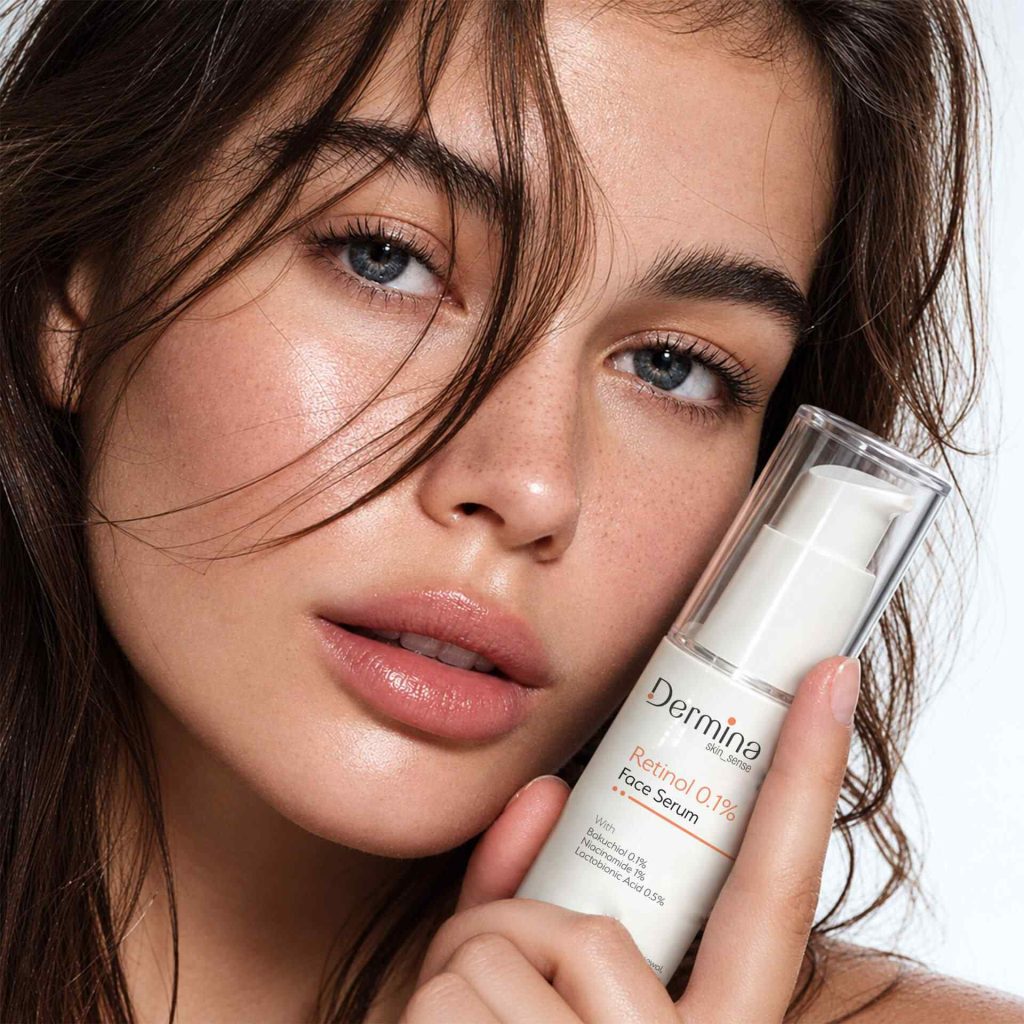
Retinol’s had a moment for a while now, and honestly, it deserves the hype. Fine lines, dull skin, rough patches, the odd breakout people throw it at almost every complaint. But nobody really sits you down and explains how to use retinol serum properly, and that part matters more than which brand you pick. Go too hard, too soon, and your face lets you know about it. Redness. Flaking. That tight, stingy feeling you can’t ignore. None of that is inevitable, by the way. Most of it comes from rushing.
There’s a much easier way to do this. Ease in, choose something that fits your skin, keep the rest of your routine boring on purpose, and give it a few weeks to settle. Do that, and retinol tends to stick around in your night routine for good you kind of forget what your night routine even looked like before it.
So here’s what we’ll get into: what a retinol serum actually is, what’s happening under your skin when you use it, which retinol serum benefits are real (not marketing fluff), and how to start without wrecking your face along the way.
What Is Retinol Serum?
Retinol is vitamin A, basically, just packaged up in a form your skin can actually use. It’s one member of a bigger family called retinoids. Skincare brands love it because it speeds up how fast your skin renews itself, and that single change knocks out a surprising number of complaints at once.
A retinol face serum is a light, quick-absorbing liquid built around retinol plus a few helper ingredients. You put it on after cleansing. Since it’s so thin, it slides in easily under whatever comes next.
Most people pick it up for:
- Fine lines and early ageing signs
- Texture that feels rough or uneven
- Skin that just looks tired and dull
- Blotchy, uneven tone
- Pores that seem way more noticeable than they should be
- Occasional breakouts or leftover marks
Buying your first one? Match it to your skin type, and actually read the label instead of skimming it. That one habit alone can save you a genuinely rough couple of weeks.
How Does Retinol Serum Work on Your Skin?
Here’s the short version. Your skin turns retinol into retinoic acid, which is the form vitamin A needs to be in to actually do anything useful. That conversion is what speeds up cell turnover, and faster turnover is basically what renewal means.
Stick with it long enough, and fine lines soften a bit, texture smooths out, pigmentation fades a shade. Pores stay clearer too, since dead cells aren’t sitting around clogging things up.
Don’t expect fireworks on night one, though. Hydrating serums feel amazing the second they touch your skin. Retinol just doesn’t work that way , it’s slow, and what you get out of it depends on your skin type, how strong the formula is, how often you’re applying it, and what exactly you’re trying to fix. Two people can use the exact same bottle and end up on totally different timelines, and that’s completely normal.
What Are the Benefits of Retinol Serum?
There’s a reason people keep coming back to it. Here are the retinol serum benefits that actually check out.
1. Fine Lines Soften
Retinol supports collagen and skin renewal, which is exactly why anti-aging routines lean on it so heavily. Stick with it, and lines gradually look less obvious.
2. Texture Improves
Dealing with rough patches? Bring retinol in slowly, and the texture usually smooths out over the following weeks.
3. Tone Evens Out
Combine it with sunscreen every day, and retinol can chip away at dullness and uneven pigmentation over time.
4. Fewer Clogged Pores
Since it clears out dead cells before they build up, retinol genuinely helps if you’re dealing with the occasional breakout.
5. Skin Looks More Refined
Once renewal picks up speed, texture and pores both start looking noticeably tighter.
Just don’t rush judgment. This is a slow-build ingredient through and through, not a fast fix you can force.
Retinol Serum for Beginners: What Should You Know?
Completely new to this? One rule trumps everything else: slow down.
A lot of beginners assume more product means faster results. Nope. Overdoing it mostly just raises your risk of irritation, and you don’t get anything extra for the trouble.
Grab a retinol serum for beginners with a mild, low-strength formula, and let your skin catch up in its own time. A patch test helps too , try a small area first, following the label, before committing your whole face to it. Give it a day, check in on your skin, then decide if you’re ready to go further.
Start With a Low Frequency
Two nights a week is plenty at first. Still comfortable a few weeks in? Add a third night.
Roughly speaking:
- Weeks 1–2: 2 nights per week
- Weeks 3–4: 2–3 nights per week
- After that: only bump it up if your skin’s genuinely fine with it
Nobody’s racing you here, not even your skin. The point is a routine your skin can actually live with, not one it barely survives.
How to Use Retinol Serum Step by Step
Want the actual mechanics of how to use retinol serum? Five steps, no more.
Step 1 — Cleanse. Wash up at night with something gentle. Clear off makeup, sunscreen, dirt, oil — no aggressive scrubbing needed. Pat your face dry once it’s clean.
Step 2 — Let your skin dry completely. Damp skin soaks up more product, and more product soaking in usually means more irritation. A few extra minutes waiting makes a real difference.
Step 3 — Use a small amount. A pea-sized dab covers the whole face just fine, unless your product says otherwise. Skip the corners of your nose, the corners of your mouth, and right around your eyes , unless it’s built for those spots specifically.
Step 4 — Moisturize right after. A gentle moisturizer protects your barrier and takes the edge off dryness. Sensitive skin? Sandwich it: moisturizer first, retinol, then one more thin layer of moisturizer on top.
Step 5 — Sunscreen, the next morning, always. No skipping this one. Broad-spectrum SPF the day after any retinol night. Matters for everyone, sure, but especially once actives enter the picture.
When Should You Use Retinol Serum: Morning or Night?
Night, pretty much every time.
Nighttime setup:
Cleanser → Retinol Serum → Moisturizer
For sensitive skin:
Cleanser → Moisturizer → Retinol Serum → Moisturizer
You really don’t need a ten-step routine here. Keep it short and it’s much easier to tell what’s actually working, and if something irritates you, you’ll know immediately where to look.
The next morning:
Cleanser → Hydrating Serum/Moisturizer → Sunscreen
Feeling tight or sensitive? Scale the morning routine back even more.
How Much Retinol Serum Should You Use?
If there’s one thing to remember about how to use retinol serum, it’s this: more isn’t better, not even close.
A pea-sized amount handles the entire face. Spread it thin rather than caking it on. Extra product doesn’t speed anything up , it just gives your skin more to argue with. Retinol rewards patience, not quantity.
Formulas and strengths differ a lot from brand to brand, so lean on whatever your specific product recommends.
Thinking about where to buy retinol serum online? Check the concentration, the ingredient list, and the directions before it lands in your cart.
What Skincare Ingredients Can You Use With Retinol?
Simplicity wins while you’re getting started. That’s honestly the whole approach.
Plays nicely with retinol:
- Hyaluronic acid
- Ceramides
- Glycerin
- Gentle moisturizers
- Other hydrating basics
These keep your skin from drying out and give the barrier a bit of backup while everything adjusts.
New to actives in general? A basic lineup of cleanser, one targeted serum, moisturizer, sunscreen is plenty. Dermina has a range of skincare built for exactly this kind of everyday routine, if you want somewhere to start looking.
Already using exfoliating acids or other strong actives? Keep them on separate nights instead of stacking everything on top of retinol. Your skin will thank you for it.
Common Mistakes to Avoid When Using Retinol
Same slip-ups, over and over, in nearly every beginner’s first month.
Jumping straight to nightly use. Your skin needs time to catch up. Start with a couple nights a week and build from there, slowly.
Piling on too much product. A small dab genuinely does the job. More doesn’t mean faster or better.
Skipping moisturizer. Dryness shows up fast in the early weeks, and moisturizer is what keeps your barrier from falling apart.
Forgetting sunscreen. Every routine needs it, full stop, and activities make it non-negotiable.
Expecting overnight results. This takes weeks, not days. Judge it after a full month, not after three nights.
How Long Does Retinol Take to Show Results?
Depends entirely on the person, honestly.
Some people notice smoother skin within a couple weeks. Fine lines, uneven tone, breakouts usually take longer, sometimes a couple of months before you notice a real shift.
Showing up consistently beats using more or going daily right out of the gate. Think of retinol as something you’re building toward, not a fix you rush through.
Who Should Be Careful With Retinol?
It’s not for everyone. If your skin runs sensitive or is already irritated, go in cautiously a quick chat with a dermatologist before you start isn’t a bad idea.
Pregnant, trying to conceive, or breastfeeding? Talk to your doctor before touching any retinoid product at all.
Persistent burning, heavy redness, swelling, anything that feels like real irritation? Stop right away and get professional advice. Skipping that step isn’t worth it, even if it feels minor at first.
Frequently Asked Questions About Retinol Serum
1. How do I use retinol serum for the first time?
Cleanse, let your skin dry fully, then smooth on a pea-sized amount while avoiding sensitive spots. Moisturize right after. Start at two nights a week and build from there once your skin catches up.
2. Can beginners use retinol serum?
Absolutely. Go slow, pick a gentle formula for your skin type, use a small amount, and raise the frequency gradually over time.
3. Should I use retinol serum in the morning or at night?
Night, almost always. Sunscreen the following morning isn’t optional.
4. How much retinol serum should I apply?
A pea-sized dab is usually plenty for your whole face. Thin, not thick and check your specific product’s directions too.
5. Can I use moisturizer after retinol serum?
Yes, and you should. It supports hydration and keeps your barrier from getting stripped in the process.
6. How often should I use retinol as a beginner?
Two nights a week to start. If your skin handles that fine, add more slowly, going by your product’s guidance and how your skin actually feels.
7. Can I use retinol every night?
Some people eventually land there, but nobody has to start out that way. Build up gradually and pull back the moment irritation shows up.
8. Can I use retinol with other skincare products?
Sure, alongside gentle hydrating products. If you’re using exfoliating acids or other strong actives, alternate nights instead of combining several irritating ingredients at once.
Build Your Retinol Routine Slowly
How to use retinol serum really comes down to patience, sticking with it, and actually paying attention to how your skin reacts. Pick a good formula, use a small amount at night, start with a low frequency, moisturize consistently, and never, ever skip sunscreen the next morning.
Shopping for targeted facial products? Take a look at the Dermina face serum lineup and choose based on what your skin actually needs right now.
Ready to give retinol a shot? Dermina serums work well as a gradual addition alongside a gentle cleanser, moisturizer, and daily sunscreen.
Don’t rush any part of it. Start small, stay consistent, and let your skin set the pace.